
Clothes and shoes break where life happens—at the seam, at a hem, near a zipper pull.
When brands ship authorized repair kits, customers fix fast, stores fix right, and returns drop.
A good kit is small, clear, and built around the same thread and trims used in the product.
That turns a scary rip into a tidy win.
Why kits matter (plain and short)
- Fewer returns. A clean restitch solves a problem today, not after weeks of shipping.
- Higher resale grades. Approved repairs keep the look and color, so used items sell for more.
- Warranty clarity. If the kit is “authorized,” the fix stays inside policy and traceable.
- Brand love. People like tools that help them keep favorites alive.
What goes in the kit (the core)
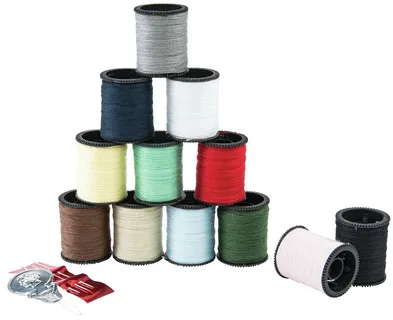
- Branded thread pack
- The same fiber family as the garment (polyester with polyester – like polyester corespun thread, polyamide with polyamide, cotton with cotton).
- Two tickets: one fine for construction, one heavier for bar-tacks.
- Color-matched mini cones or bobbins for your top 10 brand shades.
- Optional: anti-wick version for outerwear splash zones.
- Needles
- Ball-point for knits, micro/round for wovens, each labeled by size.
- Put a tiny card that says “Use this needle with this thread.”
- Mini trims
- A few zipper pulls, a small strip of matching seam tape or heat film, spare snaps/eyelets (or stitch-reinforced patches if metal-free).
- Tools
- Threader, small seam ripper, thimble dots, press cloth patch.
- Guide
- Fold-out card with three recipes: a simple restitch, a small patch repair, a hem fix.
- QR to short videos. Big pictures, few words, friendly tone.
- Tracking
- A tiny QR/serial inside the kit. Scanning logs the repair to the product’s Digital Product Passport.
Thread choices that make resale easier
- Mono-material first. If the tee is polyester, send recycled polyester thread. This keeps the end-of-life stream clean for recycling and makes repairs blend in.
- Solution-dyed blacks and core colors. Less fade, less crocking on contact with light parts.
- Finest passing ticket. Smaller holes, smoother hand. Use the heavier ticket only at stress points (belt loops, lace stays).
- Low-lint finish. Feeds clean through home machines and avoids fuzz that looks “homemade.”
Color strategy (fast and scalable)
- Build a compact palette that covers most lines: e.g., Black, Deep Navy, Charcoal, Stone, White, Core Red, Core Blue, Olive, Sand, Cocoa.
- Map each product colorway to closest kit color in PLM, with a ΔE note if you run digital color data.
- For seasonal shades, add stick-on color chips that label “use Cocoa” or “use Olive.” No guessing at the counter.
Three repair recipes (on one card)
1) Seam restitch (5–8 min)
- Needle: BP 75/11 (knit) or Micro 80/12 (woven).
- Thread: fine ticket.
- Stitch: 301 lockstitch, 10–12 SPI on knits / 8–10 SPI on wovens.
- Tip: start 1 cm before the gap, finish 1 cm past it, tie-off or micro back-tack.
2) Bar-tack reinforcement (2–3 min)
- Needle: up one size.
- Thread: heavier ticket.
- Place across the force line (perpendicular), width 3–4 mm, 10–14 stitches.
- Use at pocket corners, belt loop roots, lace slots.
3) Small seam tape/film seal (outerwear) (6–10 min)
- Clean and dry area.
- Place matching PET or PU film (same polymer as garment).
- Warm press per spec, then cool-clamp 2–3 s so memory locks.
Warranty workflow (simple, traceable)
- Customer scans the care label QR → picks “repair at home,” “in-store repair,” or “mail-in.”
- The system shows the kit ID and the right recipe.
- After repair, staff or customer scans the kit QR again to close the loop: date, recipe, minutes, parts used.
- The DPP now shows “Authorized repair #1” with location. Warranty stays valid.
Resale grading with authorized repairs
- A-Grade: invisible restitch with brand thread; color match within tolerance; no puckers; inside tidy.
- B-Grade: visible but neat; correct thread family and color family; function perfect.
- C-Grade: non-authorized materials or wrong color. Accept for parts or refurb, not premium resale.
Photos + a short checklist keep graders consistent across stores.
Store ops and microfactory tie-in
- Pre-kit counter trays: each slot holds a thread color, needle blister, and small trims.
- A tiny bench machine (single needle) at the back of store handles quick fixes under 10 minutes.
- For bigger jobs, the kit routes to a microfactory or hub with a stitch menu and heat station. The same threads run at scale.
Metrics to watch (and celebrate)
- Repairs per 1000 units sold (climb is good—it means you’re saving product).
- Warranty returns avoided (down).
- Average repair time (down as staff learns).
- Resale price uplift for repaired items (up).
- CO₂ and freight avoided by not shipping returns (record in dashboard).
Training that sticks
- 30-minute video for staff: needle/ thread pairing, SPI cheat card, how to cool-clamp film.
- Poster by the machine: “Three Recipes” with pictures.
- Monthly “repair jam” where team swaps tips and updates the playbook.
Common snags & fast fixes
| Problem | Likely cause | Quick fix |
| Puckering after restitch | Needle too big / tension high | Drop one needle size; lower top tension; lengthen stitch slightly |
| Color looks off | Wrong palette map | Check PLM mapping; switch to nearest core shade; note ΔE for next season |
| Tape lifts after wash | No cool-clamp | Add 2–3 s cool-clamp; verify film matches fabric polymer |
| Bar-tack cuts fabric | Tack too dense / cutting needle | Widen tack; swap to ball-point; add tiny backing square |
A one-week pilot plan
- Pick one bestseller in two colors.
- Ship 50 kits to three stores + e-comm customers who report seam issues.
- Train staff 30 minutes.
- Track time, success, and smiles.
- Run a small resale drop of repaired items; compare price vs. unrepaired.
- Adjust palette and recipes; scale next month.
How to tell the customer (soft, honest)
“This piece is repair-ready. Your kit uses the same thread we sew with. Fix it fast at home or in store, keep your warranty, and keep it in play longer.”
Wrap
Authorized repair kits turn small failures into brand wins.
With branded thread packs, the right needles, simple recipes, and clear tracking, you power warranty confidence and lift resale grades.
Less waste, more value, happier owners—one neat restitch at a time.
