
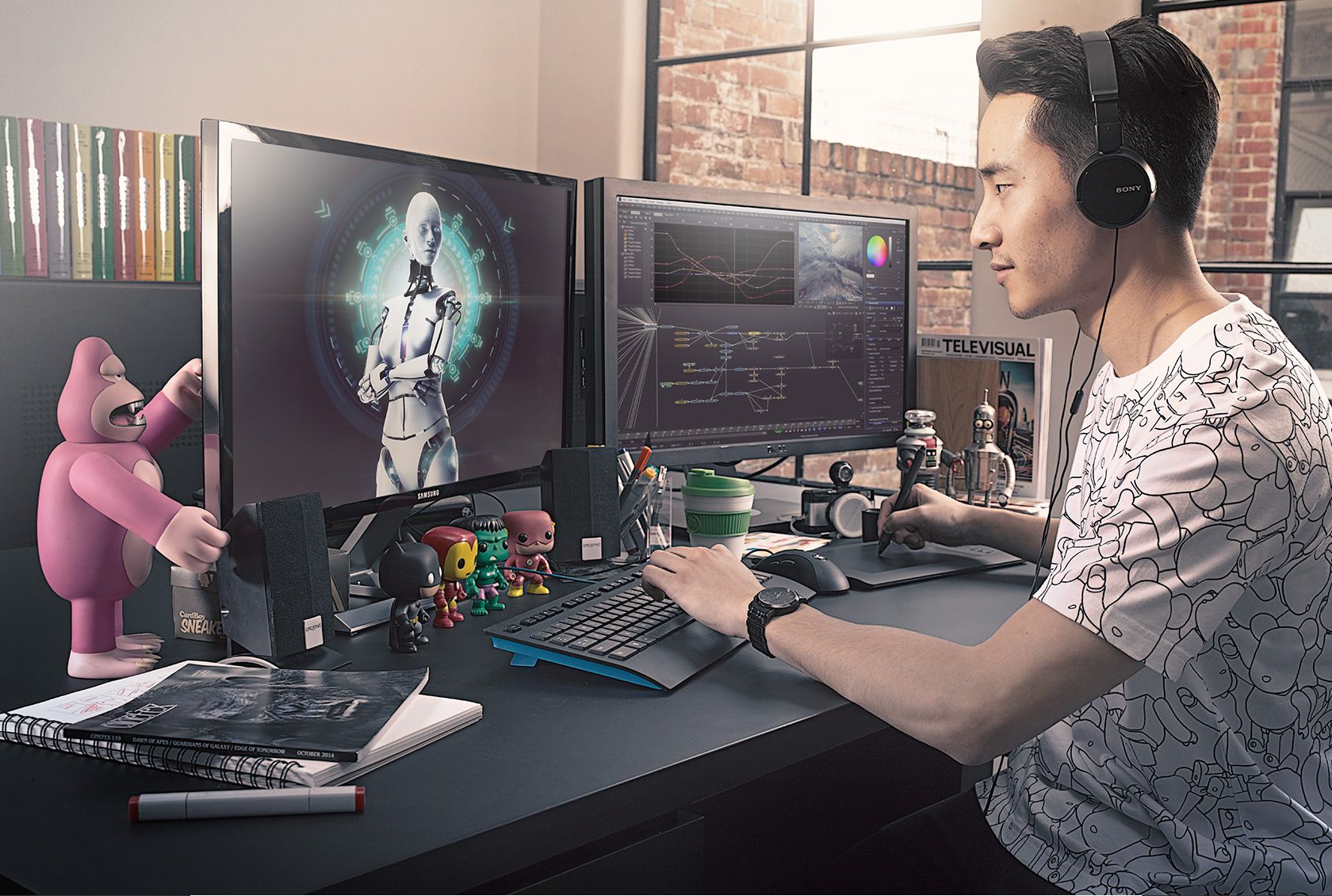
Industrial design plays a crucial role in multiple industries, shaping the aesthetics, functionality, and user experience of products. In recent years, the emergence of 3D design studios has revolutionized the field, offering new possibilities and efficiencies. This article explores the increasing significance of the 3D design studio in industrial design processes, showcasing their transformative impact on the creation and innovation of products.
Evolution of Industrial Design
In the past, industrial designers relied on traditional methods such as hand sketches, physical prototypes, and manual drafting techniques to bring their concepts to life. These methods posed several challenges, including limited accuracy, time-consuming processes, and difficulties in visualizing complex designs.
Furthermore, collaboration and communication with clients, engineers, and stakeholders were more challenging in the absence of sophisticated visualization tools. Design iterations required substantial time and effort, resulting in slower product development cycles and potentially higher costs.
However, the advent of 3D design studios has revolutionized industrial design practices. With the aid of advanced software and technologies, industrial designers can now create detailed and realistic digital models. The use of computer-aided design (CAD) software and 3D modeling techniques has enhanced accuracy, visualization, and prototyping capabilities.
Introduction to 3D Design Studios
3D design studios are specialized creative spaces equipped with advanced software and technologies to facilitate the creation of three-dimensional digital models and visualizations. These teams enable industrial designers to bring their concepts to life with greater precision, efficiency, and versatility.
By leveraging cutting-edge software and technologies, 3D design companies offer benefits such as enhanced visualization, realistic product representation, rapid prototyping, iterative design, collaborative workflows, and improved communication with stakeholders. These advantages make such vendors indispensable in modern industrial design processes.
Enhancing Product Visualization and Conceptualization
3D design studios play a pivotal role in helping industrial designers visualize and conceptualize products. By utilizing 3D modeling and rendering techniques, designers can create realistic and immersive product representations. These digital models allow for a detailed exploration of form, texture, color, and functionality before physical prototypes are produced.
The benefits of 3D design studios in product visualization are numerous, including improved design accuracy, reduced development time, and enhanced communication with clients and stakeholders. Notable industrial design projects, such as innovative consumer electronics or automotive designs, have leveraged 3D design studios to bring their concepts to life and achieve commercial success through compelling visualizations.
Streamlining Prototyping and Iterative Design
3D design studios greatly facilitate rapid prototyping and iteration processes in industrial design. With 3D design software, designers can quickly translate their concepts into digital models, which can then be directly used for 3D printing or additive manufacturing. This seamless integration allows for the creation of physical prototypes with speed and accuracy.
The use of 3D design studios for prototyping not only saves time but also reduces costs associated with traditional prototyping methods. It enables designers to iterate more effectively, accelerating the overall product development cycle.
Collaborative Design and Communication
3D design studios serve as a hub for collaboration among industrial designers, engineers, and clients, fostering effective communication throughout the design process. These studios provide a common platform where all stakeholders can contribute and share their insights, ensuring that design decisions align with functional requirements and client expectations.
3D visualization tools play a crucial role in this collaboration by enabling designers to present their ideas in a clear and visually engaging manner. By visualizing designs in three dimensions, 3D design studios facilitate better understanding, feedback, and decision-making. Moreover, these studios bridge the gap between designers and stakeholders, allowing for effective communication of design intent and promoting a shared vision for the final product.
Pushing Boundaries and Fostering Innovation
3D design studios empower industrial designers to push the boundaries of creativity and innovation. By harnessing the capabilities of advanced software and technologies, designers can explore unconventional design solutions and push the limits of what is possible.
Additionally, 3D design studios enable designers to experiment with advanced materials and manufacturing techniques. The integration of cutting-edge materials and processes, such as additive manufacturing and biomimicry, in conjunction with 3D design studios, open up new avenues for innovative product design.
Conclusion
3D design studios offer indispensable tools for industrial designers, empowering enhanced capabilities and efficiencies that traditional approaches cannot match. Looking ahead, 3D design studios are poised to continue driving innovation in industrial design, leveraging advancements in technology, materials, and manufacturing techniques. As these studios evolve, they hold the potential to shape the future of industrial design, enabling designers to create groundbreaking products that cater to ever-changing market demands.
